
UK Bathroom Renovation Costs 2026 Full Remodeling Price Breakdown
A complete, no-nonsense breakdown — from budget refreshes to luxury wet rooms — with regional prices and tips on where costs quietly spiral.
UK Bathroom Renovation Costs 2026 Whether you’re finally fed up with cracked grout and a tired avocado suite, or you’re preparing a property for sale, a bathroom renovation is one of the most popular — and most misunderstood — home improvement projects in the UK. Costs vary wildly, and many homeowners find their original budget doesn’t survive first contact with a fitter’s quote.
This guide gives you a realistic, fully itemised picture of what to expect in 2026, from the cost of tiles and taps to what happens when you try to move the toilet to a different wall.
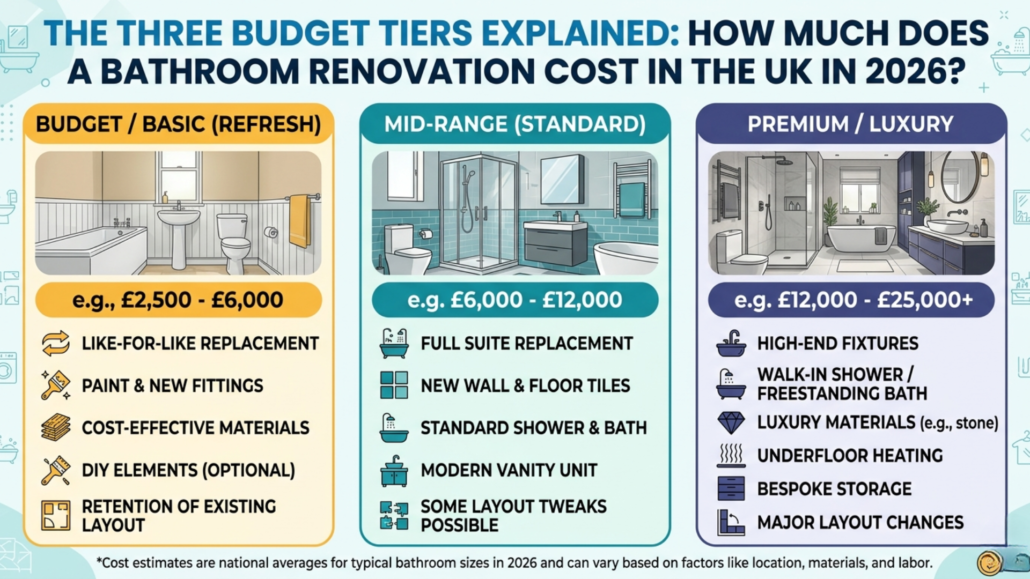
Before diving into individual line items, it helps to understand what each broad tier actually gets you:
The Three Budget Tiers Explained
| Budget | Mid-Range | High-End |
| £2,500 – £5,000 | £5,000 – £10,000 | £12,000 – £25,000+ |
Budget Refresh
Budget
A cosmetic update without moving any plumbing. Think new taps, a fresh lick of paint, updated accessories, new flooring, and possibly a replacement suite in the same position. This is a 1–2 week job with minimal structural disruption. Functional and clean — nothing wrong with that.
Standard Family Renovation
Mid-Range
Full strip-out and refurbishment. New suite (toilet, basin, bath or shower) in like-for-like positions, floor-to-ceiling tiling, heated towel rail, new lighting, and updated plumbing. The most common project type in the UK. Typically takes 2–3 weeks.
Luxury Refit or Wet Room
Premium sanitaryware, natural stone tiles, bespoke joinery, and/or a full wet room conversion with tanking and specialist drainage. Moving plumbing, freestanding baths, wall-hung WCs, and smart technology all push costs toward the upper end. Projects often take 3–4 weeks.s
Interior design plays a crucial role in enhancing the aesthetics and functionality of any space. From residential properties to corporate offices, the right design can improve productivity, boost mood, and even increase property value. In the UK, interior design services are highly sought after, with a focus on blending traditional elegance with modern innovation.
Whether you’re looking for a minimalist Scandinavian vibe, a luxurious contemporary feel, or a classic British aesthetic, the UK’s interior design industry has something for everyone.
Full Itemised Cost Breakdown
| Item | Budget Range | Mid-Range | High-End |
|---|---|---|---|
| Strip-out & Disposal | £300 – £600 | £600 – £900 | £900 – £1,500 |
| Toilet (supply & fit) | £200 – £500 | £500 – £900 | £900 – £2,500 |
| Basin & Vanity Unit | £150 – £450 | £450 – £900 | £900 – £3,000+ |
| Bath (supply & fit) | £400 – £800 | £800 – £1,500 | £1,500 – £5,000+ |
| Shower Enclosure & Tray | £350 – £700 | £700 – £1,500 | £1,500 – £4,000 |
| Tiling (supply & fit) | £800 – £1,500 | £1,500 – £3,000 | £3,000 – £7,000 |
| Plumbing Labour | £400 – £700 | £700 – £1,200 | £1,200 – £3,000 |
| Electrical Work | £200 – £400 | £400 – £800 | £800 – £2,000 |
| Flooring | £150 – £400 | £400 – £900 | £900 – £3,000 |
| Heated Towel Rail | £100 – £250 | £250 – £500 | £500 – £1,500 |
| Underfloor Heating | — | £300 – £600 | £600 – £2,000 |
| Plastering / Boarding | £200 – £500 | £500 – £900 | £900 – £2,000 |
Labour split: For a typical bathroom renovation, expect labour to account for 40–50% of the total cost. If one quote looks significantly cheaper than others, check whether the labour element is lower (possibly cutting corners on time) or whether cheaper materials have been specified. A detailed breakdown should make this clear.
The One Cost That Catches Everyone Out
Ask any experienced bathroom fitter what the single most expensive decision a homeowner makes, and the answer is almost always the same: moving the toilet.
The toilet connects to a 110mm soil pipe — a large-diameter waste pipe that runs to the main drain. Rerouting it can add £800 to £3,000 to the bill on its own, and that’s before you factor in the disruption of opening up floors or walls to get to it. The simplest jobs keep the toilet, basin, and bath roughly where they already are.
Pro tip: If you can live with the existing layout, you’ll save thousands. The visible finishes — tiles, a new suite, quality taps — make the biggest difference to how a bathroom looks, and none of them require moving pipework.
Wet Room Conversions: What’s the Extra Cost?
Wet rooms have become increasingly popular in the UK — they look great and are practical for accessibility. But they cost more than a conventional bathroom renovation.
A wet room conversion typically adds £2,000 – £4,000 on top of a standard bathroom renovation. The extra cost comes from tanking (a waterproof membrane applied to the entire floor and walls), a gradient former that creates the fall towards the drain, and specialist drain fitting.
On a concrete ground floor this is relatively straightforward. On a timber first floor, you may need additional structural support or a lightweight tanking system, which adds further cost. A complete wet room, including suite and tiling, typically lands at £8,000 – £15,000.
Regional Price Differences Across the UK
Material costs are broadly similar everywhere — it’s labour that drives the regional difference. A £7,000 bathroom renovation in the Midlands could cost £8,500–£9,000 in London. Use these multipliers as a rough guide from the national average:
| London +20–30% | South East +10–20% | South West +5–10% |
| East of England +5–10% | Midlands National avg. | North West −5 to −10% |
| North East −10 to −15% | Scotland −5 to −10% | Wales −5 to −10% |
How Long Will It Take?
Timeline depends heavily on the scope of work and whether materials are in stock or on order:
.
| Project Type | Typical Duration |
| Cosmetic refresh (no plumbing moves) | 2–3 days |
| Standard suite replacement & retile | 1–2 weeks |
| Full renovation with plumbing changes | 2–3 weeks |
| Wet room conversion | 2–4 weeks |
| New en-suite (from bedroom space) | Up to 4 weeks |
Plan for the disruption. During a full renovation, you won’t have a working bathroom. If it’s your only bathroom, a portaloo for the garden costs around £80–£120 per week. Alternatively, ask your plumber if they can reconnect the toilet each evening during the first week — some will, some won’t.
What Quotes Commonly Leave Out
This is where budgets quietly unravel. Always check whether your quote explicitly includes:
Waste removal and skip hire. Removing an old suite, tiles, plasterboard, and rubble isn’t free. Expect £300–£600 for strip-out and disposal, plus a skip if needed.
Making good after strip-out. Old adhesive, damaged plaster, or rotten flooring behind tiles are very common, especially in older homes. Budget a contingency of 10–15%.
Electrical work to Part P compliance. In England and Wales, electrical work in bathrooms must comply with Part P Building Regulations and typically requires a certified electrician. Rewiring for new LED lighting and extractor fans can run £400–£800.
Lead times for materials. Tiles from stock are available in days. A specific vanity unit from a European manufacturer might take 4–6 weeks. This affects the project timeline significantly.
Building Regulations approval. A like-for-like replacement generally doesn’t need sign-off. But adding a new bathroom, significantly moving plumbing, or creating a new en-suite may require Building Control notification.
As a specific benchmark: a bathroom fitter in London charges £250–£350/day compared to £150–£200/day in the North of England.
Does Renovation Add Value to Your Home?
A well-executed bathroom renovation typically adds 3–5% to your property value. An outdated bathroom can actively deter buyers, making renovation a worthwhile investment even if you’re selling soon. However, the return on investment is generally better if you renovate to a mid-range standard rather than over-specifying for the neighbourhood — a marble wet room in a £180,000 terraced house rarely pays for itself.
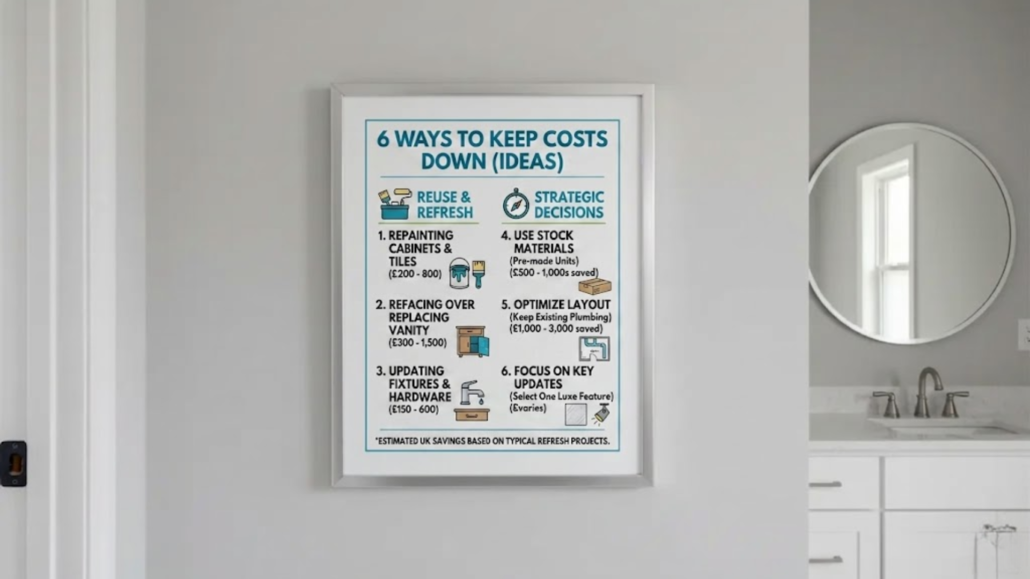
6 Ways to Keep Costs Down UK Bathroom Renovation Costs 2026
- Keep the layout. As discussed, avoiding moving the toilet, basin, and bath is the single biggest cost-saving decision you can make.
- Get three quotes. Don’t always go for the cheapest — check reviews and previous work. But comparing quotes helps you understand what’s included and where costs differ.
- Buy your own fixtures. Many fitters will install materials you supply yourself, which can cut costs if you shop around during sales. Just confirm this arrangement upfront.
- Don’t replace what doesn’t need replacing. If the bath is in good condition, you can retile around it, replace taps, and refresh surrounding surfaces. This can save £500–£1,500 compared to a full strip-out.
- Choose large-format tiles wisely. They look stunning and have fewer grout lines, but they’re slower to lay. Mid-range 600×600 porcelain can look just as good as natural stone at a fraction of the price.
- DIY the cosmetic finishing. Painting, fitting accessories, and basic tiling are achievable for competent DIYers. Leave plumbing and electrical work to qualified professionals.
Related Services:
You can also explore:
Most UK homeowners spend between £5,500 and £8,000 on a standard family bathroom renovation in 2026, with an average project cost of around £7,000. Budget around £2,500–£5,000 for a cosmetic refresh, and expect to spend £12,000–£25,000+ for a high-end refit or wet room.
The biggest variable isn’t your choice of tap or tile — it’s whether you’re moving the plumbing. Keep the layout, choose materials you love at a sensible specification, and get at least three itemised quotes from vetted tradespeople. That’s how you get a bathroom you’ll enjoy for the next decade without an unwelcome surprise halfway through the project.
By combining creativity with technical precision, interior designers and service providers like ERD Ltd are redefining what it means to create beautiful, functional spaces. So, if you’re planning a design project, don’t hesitate to explore the incredible resources available in the UK.
For more information on ERDLtd’s technical services, visit their website: https://erdltd.co.uk/
Let’s make your dream space a reality!
Get in Touch
- Email: info@erdltd.co.uk
- Phone: +44 7956 448553
Follow Us on Social Media
- Facebook: https://www.facebook.com/erdltduk/
- Instagram: https://instagram.com/erdltduk/
- LinkedIn: https://www.linkedin.com/company/erdltduk/