
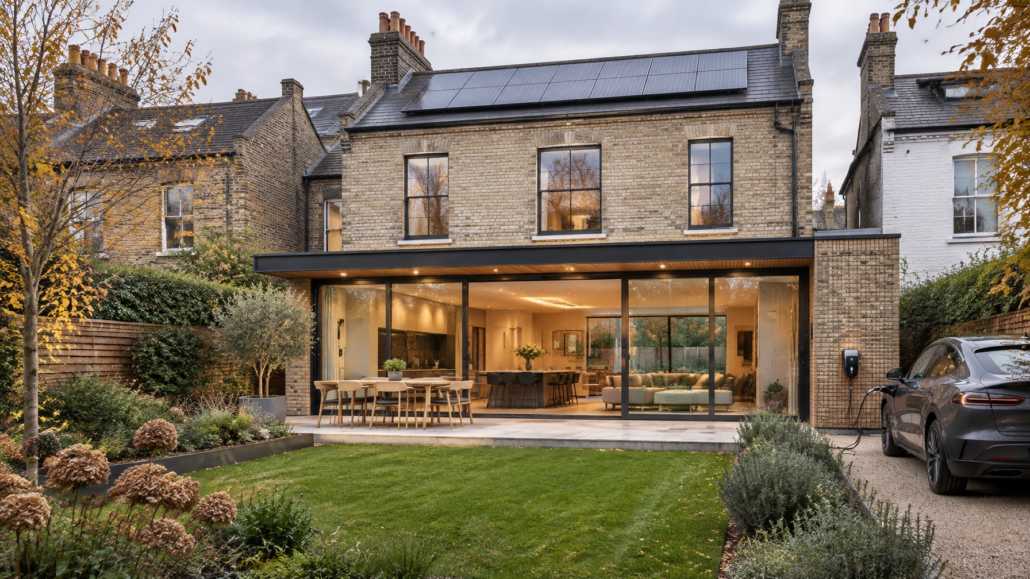
Modern Home Renovations & Green Energy Solutions: Preparing Your West London Home for Winter 2026
As the days shorten across London, winter readiness becomes more than a question of turning up the heating. A well-prepared home should retain warmth, manage moisture, use energy intelligently and remain comfortable from the first frosty morning through to the longer evenings of spring.
For homeowners in Chiswick, Hammersmith, Hampton, Kingston and Richmond, this makes autumn an ideal time to consider carefully planned renovation and green-energy improvements. A rear extension, loft conversion, kitchen refurbishment, solar PV system, battery or EV charger can each make a difference individually. Designed together, they can create a more efficient, comfortable and future-ready home.
1. Extensions designed for warmth and natural light
A thoughtfully designed house extension can transform how a home is used during winter. The objective is not simply to add floor area, but to create a naturally comfortable room that does not become too cold at the edges or excessively warm when the sun appears.
Three elements deserve particular attention:
- High-performance glazing: Double or triple glazing with low-emissivity coatings can reduce heat loss while preserving generous views and daylight.
- Continuous insulation: Walls, floors and roofs should be detailed to minimise thermal bridging. The weak points through which heat can escape.
- Solar control and orientation: Glazing should respond to the position of the sun, with shading considered where large south- or west-facing windows could cause summer overheating.
A well-designed extension can also improve the performance of the original house. By coordinating insulation levels, airtightness, heating controls and ventilation across the enlarged property, homeowners can avoid creating a warm new room connected to a draughty older one.
The Future Homes and Buildings Standards are due to come into force in England on 24 March 2027. They do not impose a blanket retrofit requirement on existing homes, but regulated work such as extensions, replacement windows and certain building-service upgrades will need to meet the applicable building regulations. If you are considering an extension in West London, early architectural and planning advice is valuable, particularly where conservation-area or streetscape considerations apply.
Explore Evolve’s planning and architecture services and construction services for a coordinated approach from concept to completion.
2. Loft conversions: warmth, ventilation and winter daylight
A loft conversion offers an elegant way to create a bedroom, study or retreat without extending into the garden. However, the roof is one of the most exposed parts of a property, so winter comfort depends on more than adding insulation between the rafters.
A refined loft design should consider:
- Insulation above and between the rafters, with careful detailing around junctions
- Airtightness to reduce uncontrolled draughts
- Roof windows positioned to capture limited winter daylight
- Mechanical or background ventilation where required
- Appropriate heating controls for a room that may not be occupied continuously
- Safe, accessible routes for maintenance and future inspection
Ventilation is especially important. A highly insulated loft can still suffer from condensation if moist air from bathrooms, kitchens or drying laundry is allowed to accumulate. Good extraction, correctly positioned air inlets and sensible occupant controls help maintain a healthier internal environment.
Rooflights also deserve a balanced approach. Larger areas of glazing can bring welcome daylight during short winter days, but should be specified with strong thermal performance and appropriate solar-control properties. The result should feel bright and calm rather than cold and exposed.

See how Evolve approaches bespoke loft conversions, combining spatial planning with considered materials, lighting and insulation.
3. Winter-focused kitchen and bathroom renovations
Kitchens and bathrooms are among the most intensively used rooms in a winter home. They also combine water, heat, hard surfaces and ventilation requirements, making detailed design essential.
Kitchens
A winter-ready kitchen can incorporate:
- Underfloor heating beneath suitable stone, porcelain or engineered flooring
- Efficient appliances with carefully planned electrical circuits
- Durable, easy-clean surfaces that remain comfortable and practical
- Improved extraction to remove cooking moisture and odours
- Layered lighting for darker mornings and evenings
- Better connection to an extension without creating draughts at the threshold
Underfloor heating is particularly attractive beneath tiled or stone floors because it provides an even, gentle warmth without relying solely on radiators. It should be designed alongside the wider heating system, floor build-up and controls rather than added as an afterthought.

Bathrooms
In bathrooms, the details behind the finishes matter just as much as the visible design. A well-executed renovation should address:
- Waterproof tanking and wet-room falls
- Correctly sealed junctions around baths, showers and basins
- Efficient mechanical extraction with suitable run-on controls
- Heated towel rails or underfloor heating
- Condensation-resistant decoration and materials
- Adequate ventilation after bathing, not only during use
For homes in Richmond, Kingston, Hampton and surrounding areas, a bathroom renovation is an opportunity to improve comfort while protecting the underlying structure from long-term moisture damage. Evolve provides full-service bathroom remodelling and kitchen renovation.
4. Solar PV and batteries: winter generation still has value
Solar panels do not stop working in winter. Output is lower because days are shorter and the sun sits lower in the sky, but a typical 4 kWp system may still generate approximately 60–180 kWh per month during the winter period, depending on orientation, shading and weather. These figures are indicative rather than guaranteed.
Winter generation can be valuable because household demand is generally higher. Energy produced during daylight may offset lighting, appliances, heating controls and daytime occupancy. A battery can then store surplus generation for early evening use.
Storage also changes how a home interacts with energy tariffs. Instead of exporting excess daytime electricity and importing at the evening peak, a battery may allow more energy to be used later. Subject to the chosen tariff and system controls, it can also charge during lower-cost overnight periods and discharge when electricity is more expensive.
Planning rules should be checked carefully. The solar planning amendments made on 30 July 2026 came into force on 27 August 2026 in England. They broaden and clarify permitted-development rights for certain domestic solar installations, including some wall, balcony and roof-enclosure arrangements. However, limits still apply, and listed buildings, scheduled monuments, highway-facing locations and conservation areas may require additional advice or consent. The official amendment order and local planning authority guidance should be considered before work begins.
Electrical design is equally important. BS 7671:2018+A4:2026 was issued on 15 April 2026 and becomes the only acceptable edition for new installations from 15 October 2026. The amendment includes updated provisions affecting solar PV, stationary batteries, prosumer installations, surge protection and bidirectional power flows.
Evolve’s renewables service can help coordinate solar PV, storage and the wider electrical requirements of a renovation.
5. Why autumn is the right time to install an EV charger
An EV charger installed before winter can make the daily commute from West London considerably more convenient. Overnight charging means the vehicle is ready before an early start, while smart controls can help take advantage of off-peak tariffs.
A properly designed installation should assess:
- The home’s existing consumer unit and available electrical capacity
- Cable route, charger position and any external works
- Whether dynamic load management is required
- Compatibility with solar PV and battery storage
- Earthing, residual-current protection and isolation
- The household’s likely charging pattern
Load management is particularly important where an EV charger operates alongside electric heating, induction cooking, solar export or battery charging. The charger should not simply be added to an already heavily loaded system.
Under BS 7671:2018+A4:2026, EV charging installations require suitable dedicated circuits, protection and consideration of the wider prosumer installation. A qualified electrical contractor should inspect, test and certify the completed work. Evolve’s electrical services include charger installation, inspection and testing.
6. Indicative costs, payback and wider benefits
The following figures are broad 2026 UK indications only. Actual costs depend on property access, specification, roof structure, scaffolding, finishes, electrical capacity, planning constraints and the complexity of the design.
| Upgrade | Indicative 2026 cost |
|---|---|
| 4 kWp solar PV system | £5,000–£7,500 |
| 5–10 kWh domestic battery | £3,000–£6,000 |
| Standard 7 kW EV charger | £800–£1,200 |
| Solar, battery and EV charger package | Approximately £9,000–£14,000 |
A typical 4 kWp solar installation may have an indicative payback of around 8–11 years. Adding a battery may increase total savings by improving self-consumption and shifting energy into higher-cost periods, although the additional capital cost can produce a similar or longer overall payback of approximately 9–13 years. A solar-and-battery system used regularly with an EV may fall within an indicative 9–14-year range.
These estimates are not promises. Tariffs, export rates, household demand, roof orientation and future energy prices will all affect the result.
The benefits extend beyond the bill:
- Improved winter comfort and reduced draughts
- Lower reliance on grid electricity
- Better use of renewable energy generated at home
- Potential improvement to EPC performance
- More attractive future resale credentials
- Greater flexibility for changing energy tariffs and transport habits
- A more considered, durable and enjoyable living environment
A warmer, more intelligent West London home
Winter readiness is most effective when it is designed as part of a wider transformation. The right extension can improve thermal performance. A loft conversion can add space without sacrificing comfort. A kitchen or bathroom renovation can address heat, moisture and ventilation in detail. Solar, storage and EV charging can then support the way the household uses energy every day.
For homeowners in Chiswick, Hammersmith, Hampton, Kingston, Richmond and across London, Evolve Renovations & Developments Ltd provides an end-to-end service spanning design, planning, construction, interiors, electrical works and renewables. To discuss a considered winter-ready renovation for your home, contact Evolve through the dedicated contact page.