
How Do You Know If Your House Needs Rewiring?
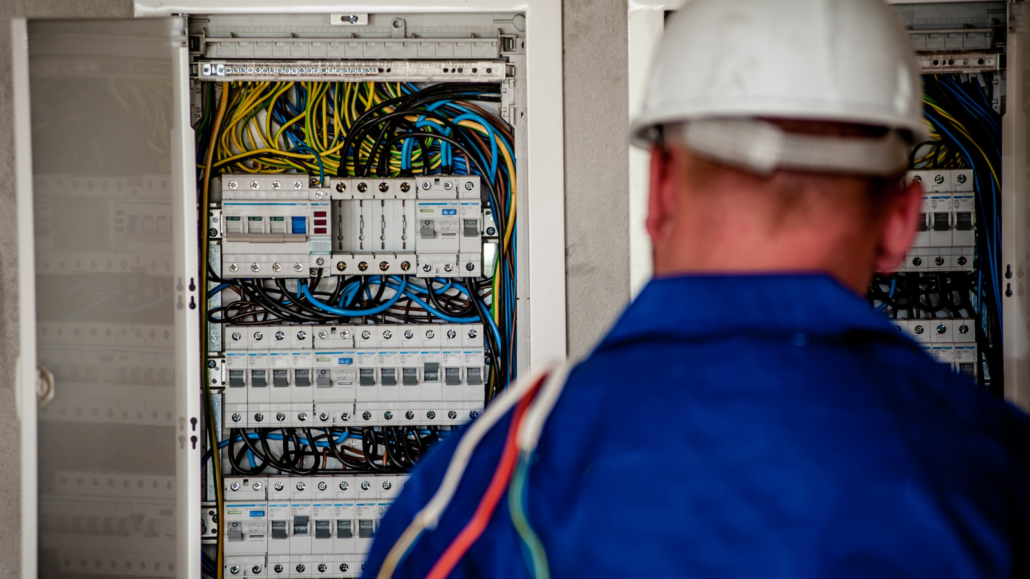
A house may need rewiring if it has old or deteriorating cables, frequent circuit trips, burning smells, buzzing sockets, exposed wiring, outdated fuse boxes, or an unsatisfactory EICR. Age alone does not mean a full rewire is necessary; a qualified electrician should inspect the installation and determine whether repairs, partial rewiring, or full house rewiring is appropriate.
What Are the Main Signs Your House Needs Rewiring?
Older electrical installations can deteriorate over time, particularly where wiring has been heavily used or modified. Electrical Safety First recommends periodic inspection and highlights several warning signs associated with ageing installations.
Look out for:
- Frequent circuit breaker trips or blown fuses
- Burning smells around sockets, switches or the consumer unit
- Buzzing, crackling or sizzling sounds
- Scorch marks or discolouration around sockets and plugs
- Damaged, cracked or exposed cables
- Loose or overheating sockets
- An old fuse box with a wooden back or rewireable fuses
- Very old wiring with black rubber, lead or fabric insulation
- Too few sockets, causing heavy reliance on extension leads
- Electrical problems appearing whenever new appliances are used
If you notice burning, smoke, exposed conductors or repeated electrical faults, stop using the affected circuit and contact a qualified electrician promptly.
Does an Old House Automatically Need Rewiring?
No. The age of a property alone does not prove that rewiring is required.
Electrical Safety First specifically notes that there are no fixed rules saying a property must be rewired after a particular number of years. The condition of the installation, the materials used and how the electrical system has been modified all matter.
However, certain features can indicate that an installation is particularly old. For example, black rubber, lead or fabric-covered cables, old-style sockets and older fuse boxes may indicate wiring that is more than 40 years old and should be assessed by a registered electrician.
This is especially relevant for older homes in Hounslow, Middlesex and wider West London, where homeowners may be renovating properties that have had several generations of electrical alterations.
What Is an EICR and Can It Tell Me If I Need Rewiring?
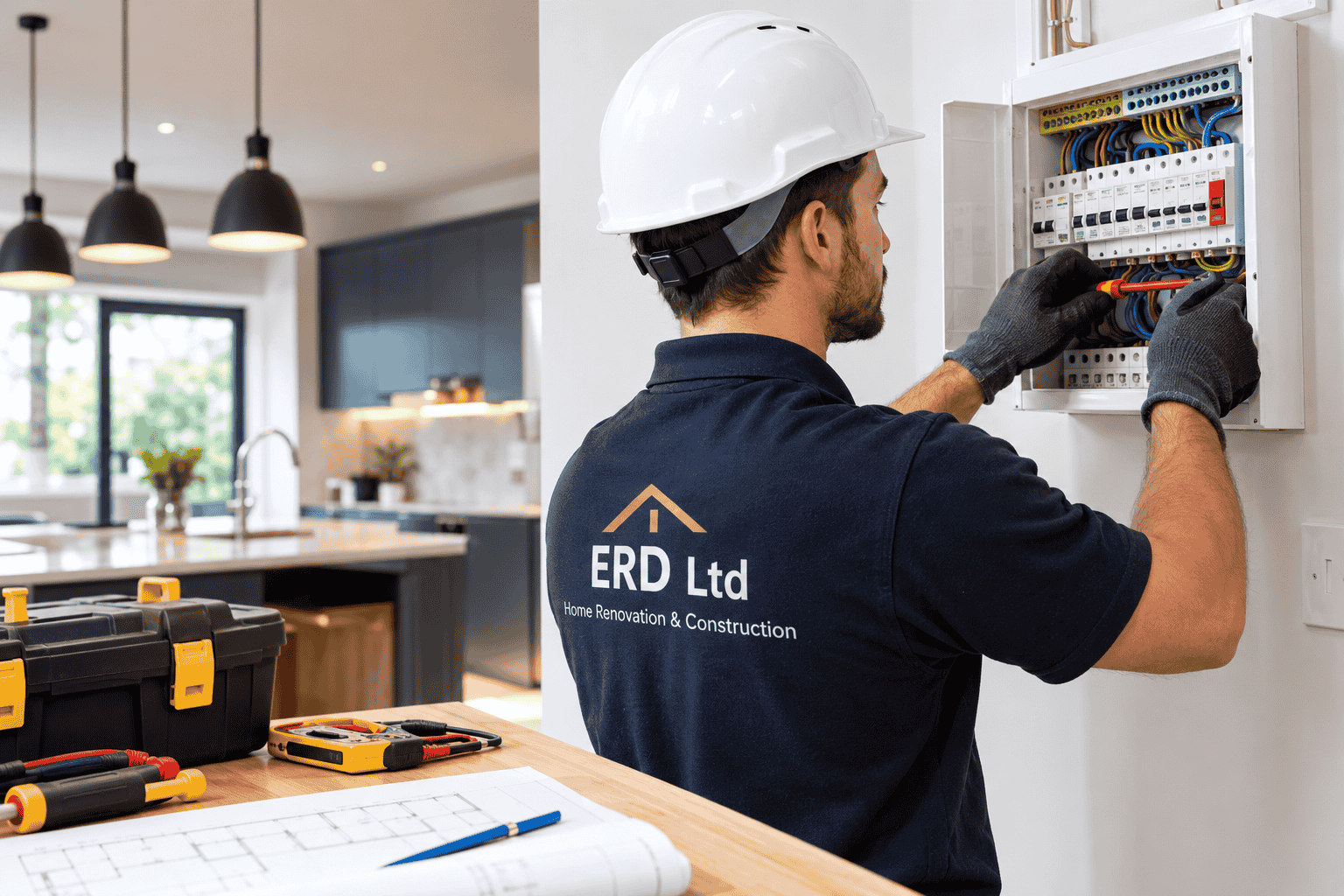
An Electrical Installation Condition Report (EICR) is one of the most useful ways to assess the condition of your home’s fixed electrical installation.
An electrician inspects and tests the installation, including wiring, sockets, switches, earthing and other relevant components. The report identifies safety issues and can help determine whether you need remedial work, partial rewiring or a full house rewire.
For owner-occupied homes, Electrical Safety First advises periodic inspection at least every 10 years, while rented accommodation should generally be inspected every 5 years.
If you are buying an older property in West London, arranging an electrical inspection before or shortly after purchase can also help identify unexpected electrical work before you begin a larger renovation.
When Is Full House Rewiring Necessary?
A full house rewiring may be recommended when substantial parts of the installation are unsafe, severely outdated or unable to support the property’s electrical requirements.
Typical reasons include:
- Widespread deterioration across multiple circuits.
- Old or damaged cable insulation.
- Serious problems with earthing or bonding.
- Repeated electrical faults affecting different parts of the property.
- An EICR identifying significant safety defects.
- Major renovation work where existing wiring cannot reasonably be retained.
- An electrical system that has been repeatedly altered without proper upgrading.
Importantly, a property does not automatically need a complete rewire simply because it has an older electrical installation. Current BS 7671 requirements do not mean every existing installation must automatically be upgraded to the latest standard if it remains safe.
What Does House Rewiring Involve?
A professional house rewiring project normally involves inspecting the existing installation, planning new circuits and replacing unsuitable wiring and accessories.
Depending on the property, the process can include:
- Initial electrical inspection and assessment
- Circuit design and load assessment
- Safe isolation of the existing installation
- Removal or disconnection of redundant wiring
- Installation of new cables and circuits
- Upgrading sockets and switches
- Consumer unit assessment or replacement where required
- Earthing and bonding improvements
- Installation of appropriate protective devices
- Testing and inspection
- Electrical certification after completion
The exact scope depends on the property’s size, construction, existing wiring and renovation requirements.
How Long Does a Full House Rewire Take?
A typical domestic rewire can take approximately 5–10 working days, although larger properties, occupied homes and projects combined with renovation work can take longer.
The timeline depends on factors such as:
- Number of bedrooms and floors
- Number of electrical circuits
- Accessibility of cables
- Whether walls and ceilings need opening
- Condition of the existing installation
- Number of sockets, switches and lighting points
- Whether other renovation work is happening simultaneously
For this reason, homeowners should obtain a property-specific assessment rather than relying on a fixed timeframe.
How Much Does House Rewiring Cost in Hounslow?
The cost of house rewiring depends heavily on property size, access, circuit requirements and the amount of making-good work required.
As a broad budgeting guide, homeowners might encounter figures such as:
- Small property/flat: around £3,000–£5,000
- Typical 2–3 bedroom house: around £5,000–£8,000
- Larger 4–5 bedroom property: around £8,000–£12,000+
These are budgeting ranges rather than fixed ERD Ltd prices. A proper quotation should follow an inspection of the property and its existing electrical installation.
If rewiring is being completed alongside a house renovation, kitchen refurbishment or loft conversion, coordinating the electrical work with the wider project can reduce unnecessary disruption.
Do You Need Planning Permission for Rewiring?
Usually, planning permission is not required simply to rewire a house. However, electrical work must comply with the relevant Building Regulations requirements in England.
Under Part P of the Building Regulations, domestic electrical installation work must be designed and installed to protect occupants from fire and electric shock. Depending on the work, it may need to be notified to Building Control or carried out by an electrician registered with an appropriate government-approved competent person scheme.
Rewiring should also be designed, installed, inspected and tested in accordance with the applicable BS 7671 requirements.
Should You Search for “Electricians Near Me” or Use a Registered Electrician?
Searching for “electricians near me” is a useful starting point, but don’t choose an electrical company based only on location or price.
Ask whether the electrician has the appropriate competence, insurance and registration for the work required. Electrical Safety First recommends using a registered electrician, and recognised schemes include NICEIC and NAPIT.
For homeowners in Hounslow and West London, ERD Ltd provides electrical works as part of its wider renovation and construction services, allowing electrical requirements to be considered alongside other home improvement work.
When Should You Call an Electrician?
You should arrange an electrical inspection if you notice repeated faults, overheating, unusual sounds, burning smells, damaged wiring or an outdated fuse box.
You should also consider an inspection before starting a major renovation. Electrical work is much easier to plan when walls, ceilings and floors are already being opened for construction.
For electrical maintenance in an older Hounslow property, an inspection can help identify problems before they become expensive or dangerous.
What Should You Do If You Think Your House Needs Rewiring?
A sensible approach is:
- Stop using any visibly damaged or overheating electrical equipment or circuit.
- Arrange an inspection with a qualified electrician.
- Request an EICR where appropriate.
- Ask whether the problem requires repairs, partial rewiring or a full rewire.
- Get a detailed quotation covering labour, materials, testing and certification.
- Confirm that the completed work will comply with applicable Building Regulations and BS 7671 requirements.
ERD Ltd works with homeowners across Hounslow, Middlesex and West London on electrical and wider renovation requirements. Because rewiring can be disruptive, planning it alongside other construction work can make the overall project more efficient.
FAQ: House Rewiring
How do I know if my house needs rewiring?
Look for burning smells, buzzing sockets, repeated circuit trips, damaged cables, old fuse boxes and deteriorating wiring. An EICR carried out by a qualified electrician is the safest way to establish whether rewiring is necessary.
How often should a house be rewired?
There is no fixed number of years after which every house must be rewired. The condition of the installation matters more than age, although older wiring should be inspected regularly.
Does a 40-year-old house need rewiring?
Not necessarily. A 40-year-old property may still have a safe electrical installation, but old cable types, accessories and other warning signs should be assessed by a qualified electrician.
How long does a full house rewire take?
A typical full rewire may take around 5–10 working days, although larger properties and difficult-to-access wiring can take longer. Combining rewiring with renovation work may also affect the schedule.
How much does a full house rewire cost in the UK?
A broad starting budget can be around £3,000–£12,000+, depending on property size, wiring condition, access and the specification of the new installation. A site assessment is needed for an accurate quotation.
Is house rewiring covered by Building Regulations?
Yes. Domestic electrical work in England is subject to Part P of the Building Regulations, and applicable work must meet the relevant safety requirements. A registered competent electrician can handle the certification and notification requirements where applicable.
→ Book a Free Consultation
→ Website