
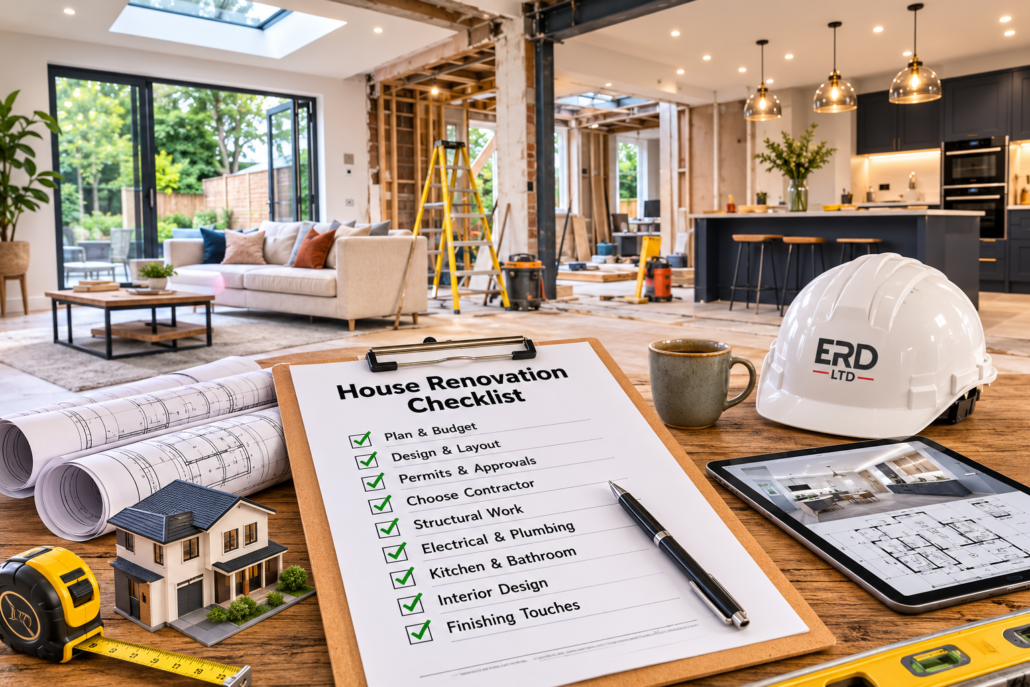
House Renovation Checklist UK: 12 Steps for Homeowners
A house renovation checklist helps UK homeowners plan every stage of their project, from setting a budget and checking permissions to structural repairs, electrical work and final inspections. Start by assessing your property’s condition, setting aside a 10–20% contingency, choosing qualified contractors and organising the correct renovation sequence before construction begins.
Whether you’re renovating a Victorian terraced house in Hounslow, upgrading a family property in Middlesex or planning a full home refurbishment in West London, following a structured checklist can help you control costs, reduce delays and avoid common renovation mistakes.
Quick House Renovation Checklist for UK Homeowners
Before starting a house renovation, use this checklist to organise your budget, approvals, contractors and construction work.
Before Renovation
- Inspect the property’s structural condition, roof, damp and existing services.
- Decide which rooms need renovation.
- Identify essential repairs and optional improvements.
- Set a realistic renovation budget.
- Allow a 10–20% contingency for unexpected costs.
- Check whether planning permission is required.
- Confirm applicable Building Regulations requirements.
- Check whether the Party Wall etc. Act 1996 applies.
- Obtain architectural drawings and structural calculations where necessary.
- Compare detailed quotations from renovation contractors.
- Check insurance, qualifications and previous work.
- Agree on a written contract, payment schedule and project timeline.
During Renovation
- Arrange site access, waste removal and protection for retained areas.
- Complete necessary demolition and structural alterations.
- Repair roofing, damp problems and damaged building elements.
- Complete first-fix plumbing and electrical installations.
- Install insulation and complete required inspections.
- Finish plastering and prepare walls and ceilings.
- Install kitchens, bathrooms, flooring and joinery.
- Complete decorating and final electrical and plumbing work.
After Renovation
- Inspect the finished renovation.
- Prepare a snagging list.
- Collect applicable electrical, gas and Building Regulations documentation.
- Obtain warranties and product instructions.
- Confirm outstanding defects have been resolved.
- Complete the agreed final handover and payment process.
Homeowner tip: Save this checklist before beginning your renovation. Completing the planning and approval stages early can help prevent expensive changes once building work starts.
Step 1: Define Your Renovation Goals
Before contacting contractors, clearly identify what you want to achieve. Knowing your goals helps create a realistic budget and renovation plan.
Ask yourself:
- Are you improving your forever home?
- Preparing to sell?
- Adding more living space?
- Increasing property value?
- Improving energy efficiency?
Common renovation projects include:
- Full house renovation
- Kitchen renovation services
- Bathroom remodeling
- Loft conversions
- Home extensions
- Interior design upgrades
- Electrical rewiring
- Solar PV installation
- EV charger installation
When your priorities are clear, every decision becomes easier.
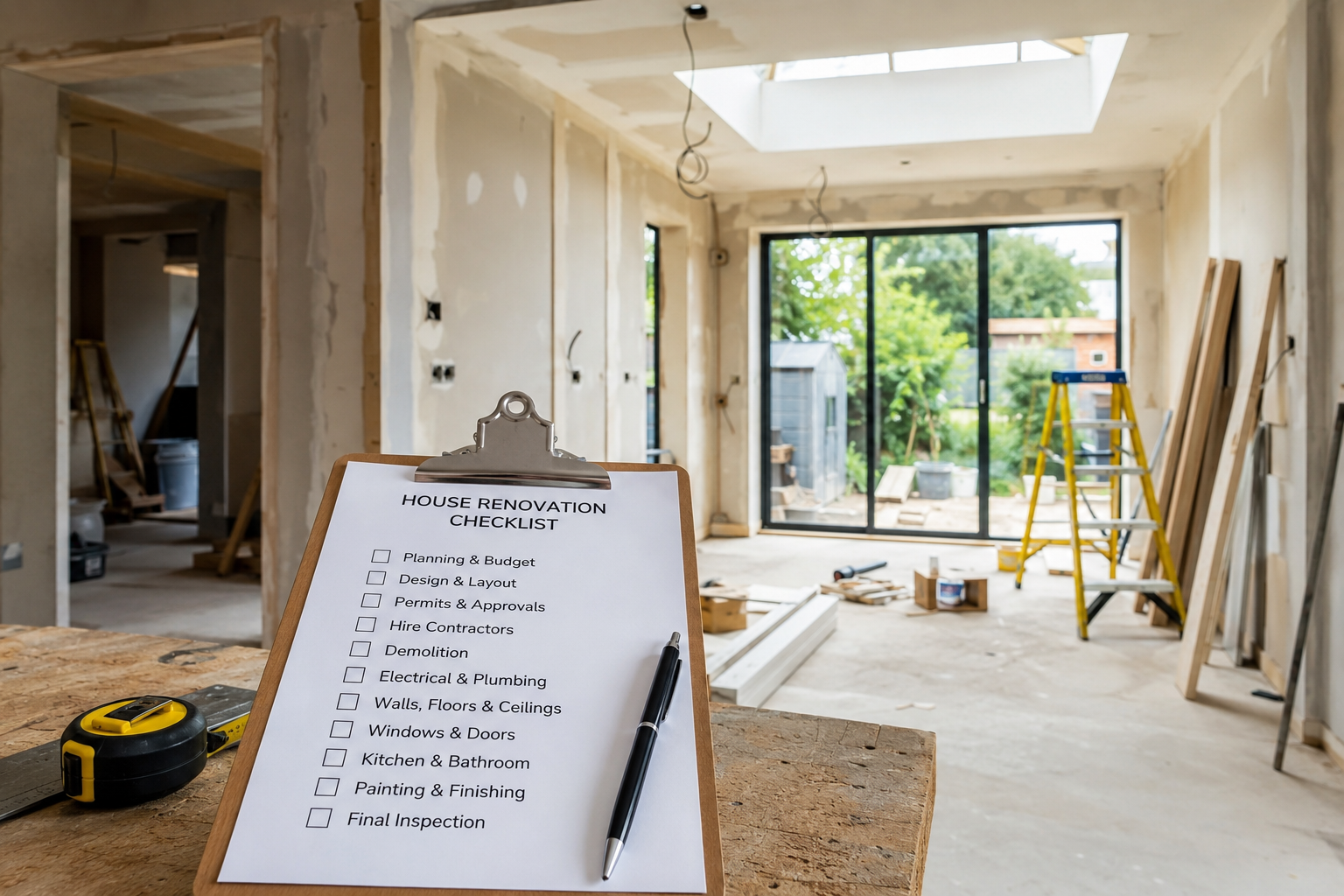
Step 2: Set a Realistic Budget
A realistic renovation budget should include construction costs, professional fees, contingency funds, and finishing materials. Most successful projects include a 10–20% contingency.
Typical UK renovation costs (2026):
| Renovation Type | Typical Cost |
|---|---|
| Full house renovation | £40,000–£120,000+ |
| Kitchen renovation | £10,000–£35,000 |
| Bathroom renovation | £6,000–£18,000 |
| Loft conversion | £40,000–£75,000 |
| Home extension | £45,000–£120,000 |
| Complete rewiring | £5,000–£12,000 |
| Solar PV installation | £5,500–£10,500 |
| EV charger installation | £900–£1,800 |
Budget for additional costs including:
- Planning applications
- Building regulations
- Structural engineer fees
- Architectural drawings
- Skip hire
- Temporary accommodation if required
Unexpected structural issues are common in older homes across Hounslow and West London, making contingency funds essential.
Step 3: Decide What Requires Planning Permission
Not every renovation requires planning permission, but extensions, structural alterations, and some external changes often do. Always check local regulations before work starts.
Projects that may require approval include:
- Large rear extensions
- Side extensions
- Loft conversions with significant roof alterations
- Listed buildings
- Conservation areas
You may also need:
- Building Regulations approval
- Party Wall Agreement
- Structural calculations
Working with experienced planning and architecture professionals can simplify this process considerably.
Step 4: Choose the Right House Renovation Company
Hiring an experienced house renovation company is one of the most important decisions you’ll make. A reputable contractor ensures quality workmanship, proper scheduling, and compliance with UK building regulations.
When comparing contractors, look for:
- Proven renovation experience
- Transparent quotations
- Public liability insurance
- Qualified electricians and plumbers
- Positive customer reviews
- Portfolio of completed projects
- Clear communication
Avoid choosing purely on the cheapest quote.
An experienced construction company in Hounslow will identify potential issues before work begins, saving time and money later.
Step 5: Create a Detailed Renovation Plan
A renovation plan should outline every stage of the project, including demolition, structural work, installations, decorating, and final inspections.
Typical project schedule:
- Design
- Planning approvals
- Material ordering
- Demolition
- Structural works
- Roofing
- Windows
- First fix electrics
- First fix plumbing
- Plastering
- Flooring
- Kitchen installation
- Bathroom installation
- Decorating
- Final fix electrics
- Snagging
- Completion
The more detailed the schedule, the fewer delays you’ll experience.
Step 6: Prioritise Structural Repairs First
Always complete structural work before cosmetic improvements. Foundations, roofing, damp issues, and load-bearing walls should be addressed before decorating.
Common structural repairs include:
- Roof repairs
- Damp treatment
- Foundation repairs
- Chimney work
- Structural steel installation
- Wall reinforcement
Skipping these repairs often leads to expensive future problems.
Step 7: Upgrade Plumbing and Electrical Systems
Older UK homes often require electrical rewiring and plumbing upgrades before new kitchens or bathrooms are installed. Modern systems improve safety and efficiency.
Consider:
- Consumer unit replacement
- Additional sockets
- Smart lighting
- Underfloor heating
- Water pressure improvements
- New pipework
Qualified licensed tradesmen should complete all electrical work in compliance with UK regulations.
Step 8: Improve Energy Efficiency
Renovation is the ideal opportunity to improve your home’s energy efficiency. Better insulation and renewable technologies reduce long-term energy bills.
Popular improvements include:
- Loft insulation
- Wall insulation
- Double glazing
- Triple glazing
- Solar PV installation
- Air source heat pumps
- EV charger installation
- Smart thermostats
Many homeowners now include renewable upgrades as part of larger renovations to future-proof their properties.
Step 9: Renovate Kitchens and Bathrooms
Kitchens and bathrooms usually deliver the highest return on investment because buyers value modern, functional spaces.
Kitchen improvements:
- New cabinets
- Quartz worktops
- Kitchen islands
- Integrated appliances
- Better lighting
Bathroom improvements:
- Walk-in showers
- Underfloor heating
- Modern tiling
- Floating vanities
- Water-saving fixtures
Professional kitchen renovation services and bathroom remodeling create practical spaces that remain stylish for years.

Step 10: Consider a Loft Conversion or Extension
Adding extra living space is often more cost-effective than moving home. Loft conversions and extensions significantly increase property value.
Popular options include:
Loft Conversion
Perfect for:
- Home offices
- Bedrooms
- Guest suites
- Children’s rooms
Typical cost:
£40,000–£75,000
Timeline:
8–12 weeks
Home Extension
Ideal for:
- Open-plan kitchens
- Dining rooms
- Family rooms
Typical cost:
£45,000–£120,000+
Timeline:
12–20 weeks
These projects are especially popular across Hounslow where maximising existing property space is often more affordable than purchasing a larger home.
Step 11: Plan Your Interior Design Early
Interior design decisions should be made before construction finishes. Choosing colours, flooring, lighting, and fixtures early prevents costly delays.
Think about:
- Flooring
- Paint colours
- Lighting schemes
- Storage
- Built-in furniture
- Window treatments
Professional interior design services help create a cohesive look while improving functionality.
Step 12: Inspect the Finished Work Carefully
Before making the final payment, inspect every aspect of the renovation and create a snagging list of outstanding issues.
Check:
- Paint finishes
- Flooring
- Doors
- Windows
- Electrical sockets
- Plumbing
- Tiling
- Appliances
- Lighting
- Heating systems
Only sign off when all agreed work has been completed.
In What Order Should You Renovate a House?
The correct order of a house renovation is to assess the property, complete necessary planning and design, obtain required approvals, carry out structural repairs, install electrical and plumbing systems, and finish with plastering, flooring, kitchens, bathrooms and decorating.
For most UK home renovations, follow this sequence:
- Property inspection and renovation planning
- Budgeting, design and required approvals
- Site preparation and demolition
- Structural repairs and alterations
- Roofing, windows and weatherproofing
- First-fix plumbing and electrical work
- Insulation and plastering
- Kitchen and bathroom installation
- Flooring, joinery and decorating
- Final inspections, certification and snagging
The exact order depends on the property’s condition and project requirements. Some activities may overlap.
What Should You Do Before Renovating a House?
Before renovating a house, inspect the property, establish your priorities, prepare a realistic budget and check whether any permissions are required.
Homeowners should also:
- Check for damp, roof damage and structural problems.
- Arrange an asbestos survey where appropriate, particularly before disturbing materials in older properties.
- Review their home insurance and notify the insurer if required.
- Obtain detailed written quotations.
- Agree on a construction schedule.
- Order materials with long delivery times.
- Plan temporary kitchen, bathroom or accommodation arrangements.
For homeowners in Hounslow, check applicable requirements with the London Borough of Hounslow before starting work.
Can You Live in Your House During Renovation?
You may be able to live in your house during a renovation if the work is limited to selected rooms and essential facilities remain safe and accessible.
However, temporary accommodation may be more practical during extensive structural work, complete rewiring, major plumbing alterations or renovations involving significant dust and disruption.
Discuss site safety, working hours and access arrangements with your contractor before construction begins.
Why Homeowners in Hounslow Choose ERD Ltd
Renovating your home involves multiple specialists, from architects and electricians to plumbers and decorators. Managing separate contractors can quickly become overwhelming.
ERD Ltd provides a complete one-stop solution for homeowners across Hounslow, West London, and Middlesex, offering:
- House Renovation
- Kitchen Renovation
- Bathroom Remodeling
- Loft Conversions
- Home Extensions
- Planning & Architecture
- Electrical Works
- Interior Design Services
- Solar PV Installation
- EV Charger Installation
Our experienced team of licensed tradesmen works together under one project management system, ensuring consistent quality, clear communication, and efficient delivery from design to completion.
Final Thoughts
A successful renovation begins long before construction starts. Careful planning, realistic budgeting, experienced professionals, and a structured checklist are the keys to transforming your property efficiently and avoiding costly mistakes.
Whether you’re planning a complete house renovation, upgrading your kitchen or bathroom, adding a loft conversion, or investing in renewable energy solutions, working with an experienced renovation specialist makes the entire process smoother and more rewarding.
Ready to Renovate Your Home?
If you’re planning a house renovation in Hounslow, West London, or Middlesex, ERD Ltd is here to help. Our experienced team offers comprehensive home renovation services, from planning and architecture to construction, interior design, electrical works, and renewable energy installations all managed under one roof.
Contact ERD Ltd today for a free consultation and no-obligation quote, and let us help bring your renovation vision to life.
Frequently Asked Questions
What should be included in a house renovation checklist?
A house renovation checklist should include property inspections, budgeting, planning approvals, contractor selection, structural repairs, electrical and plumbing work, kitchen and bathroom installation, decorating and final inspections.
What is the first step in renovating a house?
The first step is assessing the property’s condition and defining renovation goals. Identify structural problems, essential repairs and improvements before preparing your budget and contacting contractors.
How much contingency should I allow for a house renovation?
A 10–20% contingency is a useful starting point for many UK renovation projects. Older properties or projects with significant unknowns may require a larger allowance.
Do I need planning permission to renovate a house in Hounslow?
Many internal renovations do not require planning permission. However, extensions, certain external alterations and work affecting listed buildings may need consent. Building Regulations approval can apply even when planning permission is unnecessary.
How long does a full house renovation take in the UK?
A full house renovation may take approximately 3–8 months, depending on property size, structural work, material availability and project complexity. Design and approval stages can add additional time.
What is the correct order for renovating a house?
The usual order is planning, approvals, demolition, structural repairs, first-fix electrical and plumbing work, plastering, kitchens, bathrooms, flooring, decorating and final inspections.
Should I renovate the kitchen or bathroom first?
Prioritise essential repairs and underlying electrical or plumbing work before either room. Once those are complete, the order depends on your budget, daily living requirements and project schedule.
→ Book a Free Consultation
→ Website