
A Guide to Bathroom Waterproofing Renovation in Hounslow
A long-lasting bathroom renovation depends on proper waterproofing beneath the finished tiles, not simply on attractive grout or sealant. In bathrooms across Hounslow and West London, professionally installed waterproofing can help prevent hidden leaks, damp and structural damage, with a typical bathroom waterproofing process taking around 1-3 days before tiling begins.
Why Is Bathroom Waterproofing So Important?
Bathrooms are exposed to moisture every day. Showers, baths, sinks and condensation can all allow water to reach areas behind tiles or beneath flooring if the room has not been properly waterproofed.
During a professional bathroom renovation in Hounslow, waterproofing is particularly important around:
- Shower enclosures
- Walk-in showers
- Wet rooms
- Bath and shower walls
- Bathroom floors
- Pipe penetrations
- Corners and wall junctions
Tiles and grout are not completely waterproof on their own. Over time, grout can crack, silicone can deteriorate and small gaps can allow moisture to travel behind the finished surface.
A correctly installed waterproofing system creates a protective barrier behind the visible finishes. This helps protect plasterboard, timber structures, flooring and neighbouring rooms from moisture damage.
For homeowners in Middlesex and West London, this is especially important in older properties where previous bathroom work may have left hidden weaknesses behind tiled walls.
What Does Bathroom Waterproofing Actually Involve?
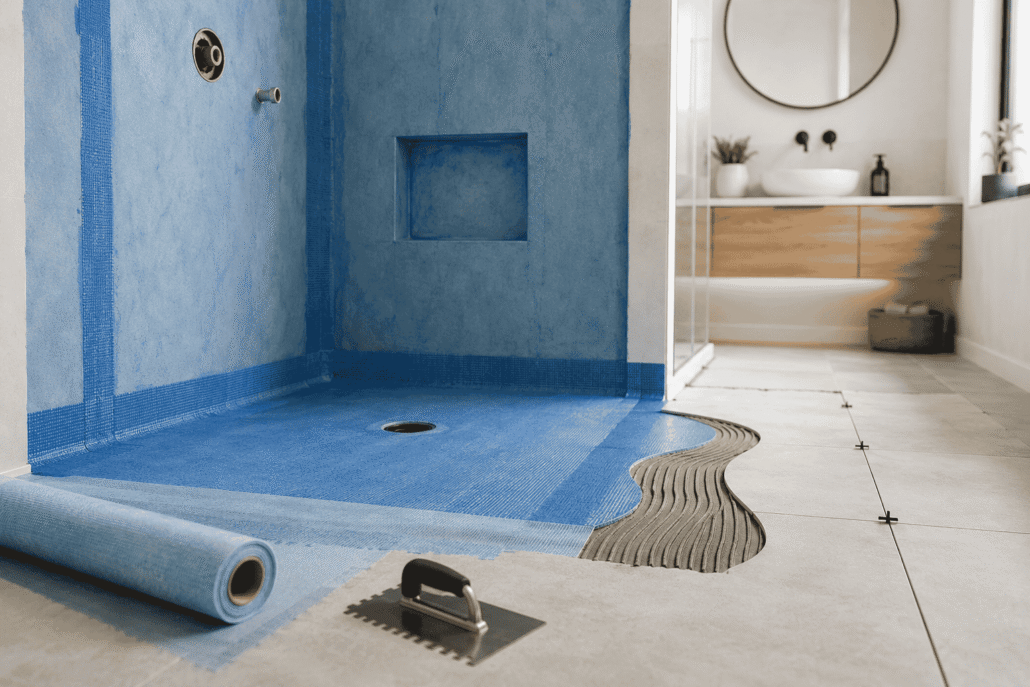
Bathroom waterproofing is the process of applying a water-resistant system to vulnerable surfaces before tiles, flooring and bathroom fittings are installed.
A typical process during a bathroom renovation may include the following steps:
- Prepare the surfaces
Old finishes, damaged boards and unsuitable materials are removed. Walls and floors must be stable, clean and suitable for the waterproofing system. - Install suitable backing boards
Areas exposed to regular water may require suitable tile backing boards rather than ordinary plasterboard. - Seal joints and corners
Waterproof tape and sealing components are installed at wall junctions, floor junctions and corners. - Seal pipe penetrations
Pipes passing through walls or floors are carefully sealed because these small openings can become common routes for water ingress. - Apply the waterproof membrane
A liquid waterproofing membrane or sheet system is installed according to the manufacturer’s requirements. - Allow the system to cure
Depending on the product and site conditions, drying and curing can take several hours or longer. - Tile or finish the surfaces
Once the waterproofing system is ready, tiles and other finishes can be installed.
The quality of preparation is just as important as the waterproofing material itself. Applying an excellent membrane over an unstable or poorly prepared surface can still lead to problems later.
Which Areas of a Bathroom Need Waterproofing?
Not every part of a bathroom is exposed to the same level of water. The highest-risk areas should receive the strongest level of protection.
Shower Areas
Shower walls and floors are among the most important areas to waterproof. Water is repeatedly directed against these surfaces, and even small failures can allow moisture behind tiles.
A walk-in shower should have particular attention around:
- Wall-to-floor junctions
- Shower corners
- Drain connections
- Glass screen fixing areas
- Pipe outlets
Bathroom Floors
Bathroom floors can be exposed to splashing, leaks and overflowing fixtures. Waterproofing may be particularly important where the floor structure includes timber or where a bathroom is located above another living space.
Around Baths
Baths require careful sealing where the bath meets the wall. However, silicone alone should not be relied upon as the only protection in areas that are regularly exposed to water.
Wet Rooms
A wet room requires a more comprehensive waterproofing approach because water can reach a larger floor area. Proper falls towards the drain and suitable waterproofing beneath the finished surface are essential.
How Long Does Bathroom Waterproofing Take?
For a standard bathroom, the waterproofing stage can typically take around 1-3 days, depending on the size of the room, the condition of the existing surfaces and the number of coats or components required.
A complete bathroom renovation in West London may take approximately 2-4 weeks from demolition to completion. Waterproofing should not be rushed simply to begin tiling earlier.
The overall programme can include:
- 1-3 days for preparation and surface repairs
- 1-3 days for waterproofing and required drying time
- Several days for tiling, depending on the bathroom size
- Additional time for bathroom fitting, electrical work and finishing
Drying times should always follow the specifications of the waterproofing products being used.
How Much Does Bathroom Waterproofing Cost in the UK?
The cost of bathroom waterproofing depends on the bathroom size, condition of the walls and floors, and whether the project involves a standard bathroom, walk-in shower or full wet room.
As part of a wider bathroom project, waterproofing materials and labour can add approximately £300-£1,500+ depending on the extent of the work. A larger wet room or bathroom requiring extensive preparation can cost more.
The main factors affecting the cost include:
- Bathroom size in square metres
- Condition of existing walls and floors
- Type of waterproofing system
- Number of shower or wet areas
- Required floor preparation
- Drainage and wet room construction
- Access and property layout
- Additional repair work
Trying to reduce costs by skipping proper waterproofing can create much larger expenses later. Repairing hidden water damage may involve removing tiles, replacing damaged boards and repairing adjoining rooms.
What Happens If a Bathroom Is Not Properly Waterproofed?
Poor waterproofing can allow moisture to travel behind tiles for months before visible signs appear.
Common warning signs include:
- Loose or cracked tiles
- Mould or persistent damp
- Peeling paint in neighbouring rooms
- Swollen flooring
- Water stains on ceilings below
- Failing silicone joints
- A persistent musty smell
In some properties in Hounslow, Middlesex and West London, older bathrooms may have been tiled directly onto unsuitable surfaces or completed without a modern waterproofing system.
The longer a hidden leak remains undetected, the greater the potential damage. Early investigation can therefore prevent a smaller waterproofing issue from becoming a larger renovation project.
Does Bathroom Waterproofing Need to Follow UK Regulations?
Bathroom renovation work in the UK may involve several requirements depending on the scope of the project.
Building Regulations can apply to associated work involving structural changes, ventilation, drainage, electrical installations and other elements of a bathroom renovation. Electrical work in bathrooms must also be designed and installed with the appropriate safety requirements in mind, including the additional risks created by bathroom zones.
Where electrical work forms part of a project, using appropriately qualified contractors is important. Homeowners should also consider whether work involving plumbing, ventilation or structural alterations requires Building Regulations approval or notification.
Waterproofing products should be installed according to the manufacturer’s instructions. Correct installation is essential because even a high-quality system can fail if joints, corners or penetrations are not properly sealed.
How Can You Make Bathroom Waterproofing Last Longer?
Long-lasting waterproofing starts with professional installation, but regular maintenance also matters.
Use this checklist to help protect your bathroom:
- Inspect silicone joints every 6-12 months
- Repair damaged grout promptly
- Keep bathroom ventilation working effectively
- Check for loose tiles or cracked finishes
- Avoid drilling through waterproofed shower areas without proper sealing
- Investigate leaks or damp marks immediately
- Replace deteriorating seals around baths and shower trays
Good ventilation is particularly important because waterproofing protects surfaces from direct water penetration, while ventilation helps control condensation and humidity.
Why Should Waterproofing Be Included in a Professional Bathroom Renovation?
A bathroom should be built as a complete system rather than a collection of individual finishes. The visible tiles, shower fittings and sanitaryware may create the final appearance, but the preparation beneath them determines how well the bathroom performs over time.
For homeowners planning a bathroom renovation in Hounslow, incorporating waterproofing into the project from the beginning can reduce the risk of expensive remedial work later.
ERD Ltd provides home renovation and bathroom remodelling services for homeowners across Hounslow, Middlesex and West London. A properly planned bathroom project can coordinate waterproofing, tiling, plumbing, electrical work, ventilation and interior finishes as part of one organised renovation process.
If you are planning a bathroom renovation and want a bathroom built with durable preparation behind the finished surfaces, contact ERD Ltd for a free quote and professional advice for your home renovation project in Hounslow or West London.
Frequently Asked Questions
Is waterproofing necessary for a bathroom renovation?
Yes, waterproofing is strongly recommended in areas regularly exposed to water, particularly showers, wet rooms and vulnerable floor areas. Tiles and grout alone should not be treated as a complete waterproof barrier.
How long does bathroom waterproofing last?
A correctly installed waterproofing system can last for many years beneath the finished surfaces. Its lifespan depends on the quality of preparation, installation, materials used and whether the bathroom develops leaks or movement over time.
Can I tile directly onto plasterboard in a shower?
Not all plasterboard is suitable for direct use in high-water shower areas. Suitable backing materials and a correctly specified waterproofing system should be considered before tiling.
How much does bathroom waterproofing cost in the UK?
Waterproofing as part of a bathroom renovation can typically add around £300-£1,500+, depending on the size and complexity of the area. Wet rooms and bathrooms requiring significant floor or wall preparation may cost more.
Do I need waterproofing under bathroom floor tiles?
Waterproofing beneath floor tiles can provide important protection, particularly in wet rooms, shower areas and bathrooms located above other rooms. The appropriate system depends on the floor construction and level of water exposure.
How long should waterproofing dry before tiling?
Drying time depends on the waterproofing product, number of coats and room conditions. Always follow the manufacturer’s specified curing time before tiling, as installing tiles too early can affect the performance of the system.
→ Book a Free Consultation
→ Website