Bath to Shower Conversion: Costs, Options and Shower vs Bathtub Guide
For most bathroom renovations in 2026, a walk-in shower is better for accessibility, everyday convenience and space efficiency, while a bathtub is better for families with young children and homeowners who enjoy bathing. In Hounslow and West London homes, the right choice depends on available floor space, household needs, budget and long-term property plans.
Walk-In Shower vs Bathtub: Which Is Better?
There is no single answer for every bathroom. A walk-in shower usually creates a more open feel and can make a small bathroom easier to use, whereas a bathtub provides a practical option for bathing children and can appeal to buyers who specifically want a bath.
Your decision should consider:
- Available bathroom space
- Who uses the bathroom
- Accessibility and future needs
- Installation and renovation costs
- Water usage and daily routines
- Potential impact on resale appeal
For compact bathrooms commonly found in Hounslow and wider Middlesex, a well-designed walk-in shower can often make better use of limited floor space.
What Are the Advantages of a Walk-In Shower?
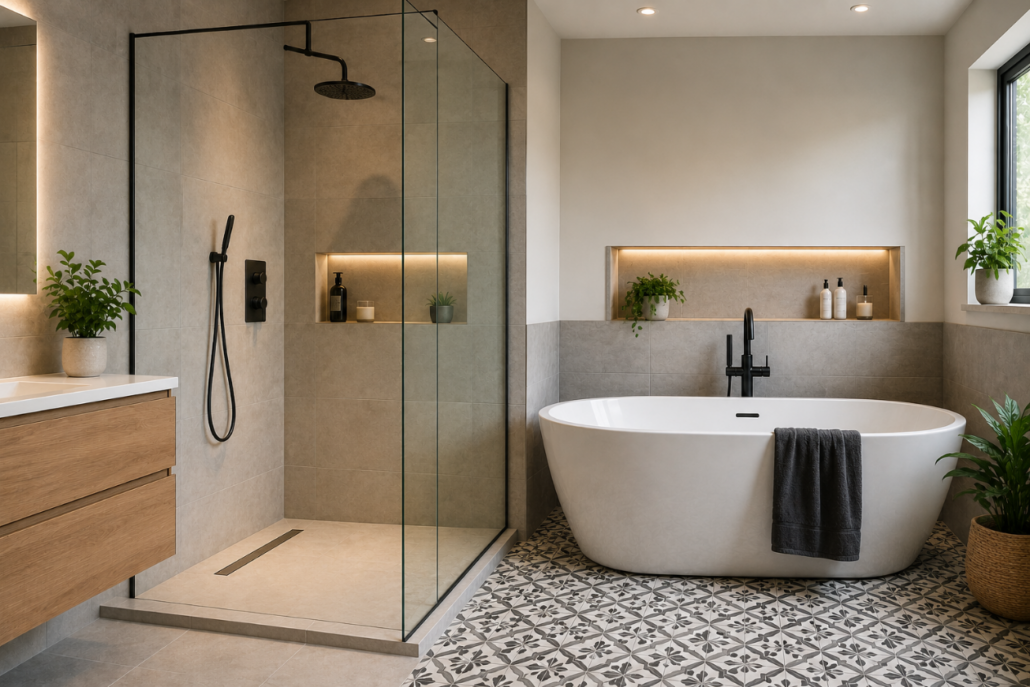
A walk-in shower removes the need to step over a traditional bath, making access easier and creating a cleaner visual appearance.
The main benefits include:
- Better accessibility: Easier entry for older homeowners or anyone with reduced mobility.
- Space efficiency: A shower enclosure can be designed around the available floor plan.
- Modern appearance: Frameless glass, large-format tiles and concealed shower controls can create a contemporary finish.
- Easy daily use: Showers are generally quicker and more practical for busy households.
- Flexible design: Shower screens, niches, benches and rainfall showerheads can be incorporated into the layout.
A properly waterproofed walk-in shower is particularly important. The installation should account for falls to the drain, tanking or an appropriate waterproofing system, ventilation and suitable bathroom finishes.
What Are the Advantages of a Bathtub?
A bathtub remains a strong choice for many UK households, especially families.
The biggest advantages are:
- Ideal for young children: Bathing small children is often easier in a tub.
- Relaxation: A bath provides a different experience from a quick shower.
- Property appeal: Some buyers prefer homes with at least one bathtub.
- Flexible combination options: A bath with a shower over it can provide both functions.
- Design variety: Freestanding, straight, P-shaped and L-shaped baths can suit different layouts.
If the property has more than one bathroom, keeping a bathtub in the main family bathroom while installing a walk-in shower in an en-suite can be an excellent compromise.

Which Option Is Better for a Small Bathroom?
For a small bathroom, a walk-in or compact shower is usually the more space-efficient option. Removing a full-size bath can create additional usable floor area and improve movement around the toilet and basin.
However, layout matters more than simply removing the bath. A bathroom renovation in Hounslow may involve repositioning the basin, toilet, shower, radiator or door to improve circulation without unnecessarily moving plumbing.
For particularly narrow bathrooms, a compact shower tray, sliding enclosure or fixed glass screen can be considered. Wall-hung sanitaryware and recessed storage can also help maintain a less crowded appearance.
Is a Bathtub Better for Families?
Yes, in many family homes a bathtub is the more practical choice. Parents with young children often find a bath easier for bathing, while older children can still use it for showers.
If space allows, homeowners do not necessarily have to choose between the two. A bath with an overhead shower provides both functions, although it requires stepping over the bath and may not provide the same accessibility as a walk-in shower.
For a larger Hounslow bathroom renovation, ERD Ltd can assess whether a bath, shower or combination layout makes the most effective use of the existing room.
How Much Does It Cost to Replace a Bath with a Shower in the UK?
The average cost to replace a bath with a shower in the UK depends on the shower design, plumbing alterations, waterproofing and finishing materials. In 2026, a straightforward bath-to-shower conversion may cost around £1,300–£2,000, while installing a walk-in shower can cost approximately £2,500 or more.
Here is an estimated breakdown of common bath-to-shower conversion options:
| Type of conversion | Estimated UK cost |
|---|---|
| Shower over an existing bathtub | £500–£1,000 |
| Replace bath with shower enclosure | £1,300–£2,000 |
| Replace bathtub with walk-in shower | Around £2,500+ |
| Larger walk-in shower with additional upgrades | £2,800–£3,500+ |
These are indicative planning figures, not fixed quotations. Actual prices in Hounslow and West London may vary depending on labour, materials and the condition of your existing bathroom.
What Is Included in a Bath-to-Shower Conversion?
A typical project may involve:
- Removing and disposing of the existing bathtub.
- Installing a new shower tray or level-access shower.
- Fitting a glass shower screen or enclosure.
- Connecting new shower controls and plumbing.
- Waterproofing the shower area.
- Replacing damaged tiles or installing new wall panels.
- Checking drainage, ventilation and water pressure.
What Factors Affect the Replacement Cost?
Several factors can influence the final cost:
1. Plumbing alterations: Keeping the new shower in the existing bath position can reduce plumbing costs. Moving drainage or water supplies may increase the budget.
2. Shower type: A standard shower enclosure is generally more affordable than a larger walk-in or level-access design.
3. Waterproofing and tiling: Damaged walls, new tiles, waterproof wall panels and specialist tanking systems can add to the project cost.
4. Labour and waste removal: Removing the old bath, disposing of materials and coordinating plumbing and installation work all affect the final quotation.
5. Bathroom condition: Hidden leaks, damaged flooring or rotten timber discovered after removing the bathtub may require additional repairs.
For homeowners planning a bathroom renovation in Hounslow, having the existing layout assessed before choosing fixtures helps avoid unexpected costs.
Is Replacing a Bath with a Shower Cheaper Than a Full Bathroom Renovation?
Yes. Replacing a bath with a shower is generally more affordable than renovating the entire bathroom because the work can be limited to one area.
However, if you also want new flooring, wall tiles, a vanity unit, toilet, lighting and complete plumbing upgrades, the project may become a full bathroom renovation.
Do I Need Planning Permission for a Bathroom Renovation?
Most internal bathroom renovations do not require planning permission when there is no extension or significant alteration to the external structure of the property.
However, Building Regulations can apply to certain work, particularly where structural alterations, electrical installations, drainage changes or other controlled building work are involved.
Electrical work in bathrooms must also comply with the relevant requirements for special locations. Where applicable, electrical installations should be completed and certified by a suitably qualified electrician, with BS 7671 requirements taken into account.
If gas appliances or gas work are involved, use an appropriately registered Gas Safe engineer. For electrical work, homeowners should use a competent electrical professional familiar with bathroom zones and the applicable UK requirements.
ERD Ltd’s planning, construction and electrical capabilities can help coordinate the different elements of a larger renovation project.
How Much Does It Cost to Replace a Shower with a Bath in the UK?
Replacing an existing shower with a bathtub in the UK depends on the bathroom layout, bath type, plumbing connections and finishing requirements. A straightforward replacement may cost less than a complete bathroom redesign, but additional work may be needed if the existing shower area is too small or the drainage and water connections need changing.
The main costs to consider include:
- Purchasing and installing a new bathtub.
- Removing the existing shower enclosure and tray.
- Adjusting water supplies and waste connections.
- Installing bath panels, taps and shower fittings.
- Repairing or replacing wall tiles and flooring.
- Waterproofing and sealing the new bath area.
Before choosing a bathtub, check that the available floor space and existing plumbing can accommodate it.
What Is the Difference Between a Bath-to-Shower Conversion and a Bathroom Remodel?
A bath-to-shower conversion focuses on replacing an existing bathtub with a shower while keeping most of the bathroom layout unchanged.
A bathroom remodel is a broader project that may include replacing the bath, toilet, basin, flooring, lighting, tiles and plumbing.
If your main goal is better accessibility or additional floor space, replacing the bath with a shower may be sufficient. If the entire room needs updating, a complete bathroom renovation could be more suitable.
Is It Worth Replacing Your Bathtub with a Walk-In Shower?
Replacing an unused bathtub with a walk-in shower can improve accessibility, make a compact bathroom feel more spacious and provide easier everyday access.
However, consider your property’s future resale appeal before removing its only bathtub. Families with young children may prefer having at least one bath in the home.
If you have another bathtub elsewhere in the property, converting the existing bathroom to a walk-in shower may be a practical improvement.
How Long Does a Bath-to-Shower Conversion Take?
A straightforward bath-to-shower conversion may take approximately 2–4 days, depending on the amount of plumbing, waterproofing, tiling and installation work involved.
More extensive projects involving floor alterations, drainage changes or additional repairs may take longer.
Walk-In Shower vs Bathtub: Our Recommendation for 2026
Choose a walk-in shower if you prioritise accessibility, quick daily use, modern styling and efficient use of limited space. Choose a bathtub if you have young children, regularly take baths or want to retain a traditional family-bathroom layout.
If you have enough space, keeping a bathtub in one bathroom and installing a walk-in shower in another can provide the strongest combination of practicality and flexibility.
For homeowners planning a complete bathroom renovation in Hounslow or West London, the layout should be decided before ordering fixtures. A small change to the position of the shower, bath, basin or toilet can significantly affect how spacious and practical the finished room feels.
Planning a Bath-to-Shower Conversion in Hounslow?
Whether you want to replace an old bathtub with a modern walk-in shower, upgrade an existing shower enclosure or redesign your entire bathroom, ERD Ltd can help you plan your renovation.
We provide bathroom renovation and remodelling services in Hounslow, Middlesex and across West London, helping homeowners create practical, comfortable and well-designed bathrooms.
Contact ERD Ltd today to discuss your bathroom renovation project and request a quote.
Frequently Asked Questions
How much does it cost to replace a bath with a shower in the UK?
Replacing a bath with a standard shower enclosure typically costs around £1,300–£2,000 in 2026. A walk-in shower conversion may cost approximately £2,500 or more, depending on plumbing, waterproofing and finishing requirements.
How much does it cost to replace a bathtub with a walk-in shower?
A bathtub-to-walk-in-shower conversion costs around £2,500 on average. Larger installations involving additional tiling, drainage changes or accessibility upgrades can cost more.
Is it cheaper to replace a bath with a shower?
Generally, yes. A simple shower conversion is often cheaper than a complete bathroom renovation because it involves fewer fixtures and less work. Keeping the existing plumbing positions can also help reduce costs.
How much does it cost to replace a shower with a bath in the UK?
The cost depends on the bathtub, existing plumbing, removal work and whether the bathroom needs new tiles or flooring. A like-for-like replacement is generally cheaper than redesigning the entire bathroom.
Can I replace my bathtub with a shower without moving the plumbing?
Yes. In many bathrooms, a shower can be installed in the existing bathtub position using the current water supply and nearby drainage connections. A professional assessment is recommended before installation.
Does replacing a bath with a shower affect house value?
It can affect buyer appeal depending on the property and its target market. Removing the only bathtub may be less attractive to some family buyers, while a quality walk-in shower can improve convenience and accessibility.
How long does it take to convert a bathtub into a shower?
A straightforward bath-to-shower conversion usually takes around 2–4 days. Additional plumbing, waterproofing, tiling or structural repairs can extend the installation time.
What is the difference between a bathtub remodel and a bathroom renovation?
A bathtub remodel focuses on upgrading or replacing the bath area. A complete bathroom renovation involves updating multiple elements, such as the shower, bath, toilet, basin, flooring, lighting and plumbing.
Do I need planning permission to replace a bath with a shower?
Most internal bath-to-shower conversions do not require planning permission. However, applicable Building Regulations and electrical safety requirements must still be considered, depending on the work involved.
→ Book a Free Consultation
→ Website