
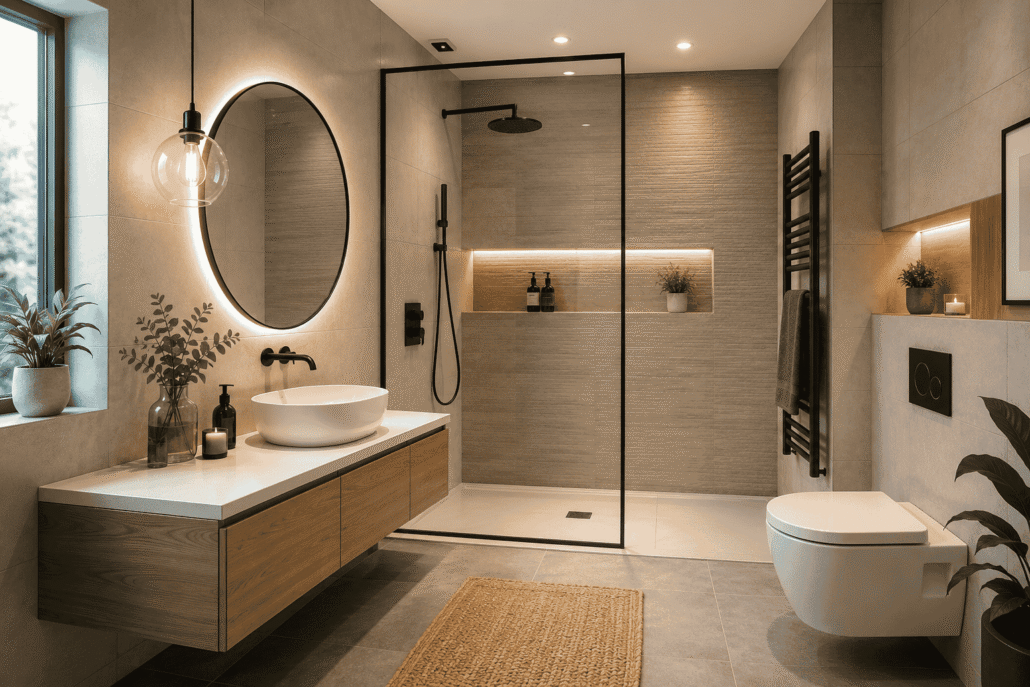
How to Remodel a Bathroom: A Bathroom Renovation Guide in Hounslow
A full bathroom renovation involves planning the layout, stripping the room back to its structure, upgrading plumbing and electrics, waterproofing, installing new surfaces and fittings, and completing final testing. In Hounslow and West London, a typical bathroom gut renovation takes 2–4 weeks and can cost approximately £8,000–£25,000+, depending on size, layout changes and specification.
A bathroom gut renovation is more than replacing a bath, toilet or tiles. The process involves coordinating several trades in the correct order to avoid delays, leaks and expensive remedial work.
For homeowners in Hounslow, Middlesex and West London, understanding each stage before work begins can make a bathroom renovation easier to budget, plan and manage.
What Is a Bathroom Gut Renovation?
A bathroom gut renovation means removing most or all of the existing bathroom, often including:
- Bath or shower
- Toilet and basin
- Wall and floor tiles
- Existing flooring
- Vanity units and storage
- Old plumbing pipework where required
- Electrical fittings and lighting
- Damaged wall or ceiling finishes
The room is then rebuilt from the structure outward.
This approach is often the best option when a bathroom has outdated plumbing, recurring leaks, poor ventilation, damaged surfaces or an inefficient layout. Many older homes across Hounslow and Middlesex have bathrooms where pipework and electrics have been altered several times over the years, making a complete renovation a more practical long-term solution.
Step 1: Plan the Bathroom Layout and Budget
The first stage of any bathroom renovation in Hounslow is deciding exactly what will change.
Keeping sanitaryware in roughly the same location can reduce plumbing costs. Moving a toilet, shower or soil pipe can add significantly to labour and materials because floors and walls may need to be opened.
Before demolition begins, the project should define:
- The bathroom layout
- Bath, shower, toilet and basin positions
- Storage requirements
- Lighting locations
- Electrical requirements
- Ventilation
- Tile and flooring choices
- The total renovation budget
For a standard UK bathroom, homeowners should generally allow around £8,000–£15,000 for a straightforward full renovation and £15,000–£25,000+ for larger bathrooms, premium finishes or major layout changes.
Step 2: Remove the Existing Bathroom
Once the design and specification are agreed, the existing bathroom can be stripped out.
This stage may include removing:
- Existing sanitaryware
- Wall and floor tiles
- Old flooring
- Damaged plasterboard
- Old cabinets and furniture
- Existing light fittings
- Redundant plumbing
A full strip-out usually takes approximately 1–3 days, depending on the bathroom’s size and the amount of material being removed.
During a gut renovation, hidden problems can also become visible. These may include water damage, rotten timber, old pipework or inadequate previous installation work. Identifying these issues before new finishes are installed helps prevent costly repairs later.
Step 3: Inspect and Repair the Structure
With the old bathroom removed, the underlying structure can be inspected.
Typical work at this stage includes checking:
- Floor joists and subfloors
- Wall condition
- Signs of water damage
- Timber deterioration
- Existing pipework routes
- Electrical cable locations
Any damaged areas should be repaired before the new bathroom is built.
This is particularly important in older properties across West London and Middlesex, where bathrooms may have been renovated several times and hidden issues can be concealed behind tiles and boxing.
Step 4: Complete the First-Fix Plumbing
First-fix plumbing happens before walls and finished surfaces are closed.
The plumber installs or adjusts the pipework needed for the new:
- Shower or bath
- Basin
- Toilet
- Heated towel rail
- Water supply connections
If the layout remains similar to the original bathroom, this stage can be relatively straightforward. Moving multiple fixtures, particularly a toilet, can increase both the project cost and installation time.
Any gas appliance work connected to the bathroom or heating system should only be completed by an appropriately Gas Safe registered engineer where legally required.
Step 5: Upgrade Bathroom Electrics and Lighting
Bathrooms require careful electrical planning because water and electricity must be separated according to UK safety requirements.
Electrical work may include:
- Ceiling lights
- LED mirror lighting
- Extractor fans
- Shaver sockets
- Underfloor heating controls
- Heated towel rails
Bathroom electrical work should comply with applicable UK Building Regulations and relevant wiring requirements. Electrical installations should also be completed and tested by a competent electrician, with certification provided where required.
For homeowners planning a full bathroom renovation in Hounslow, this is the ideal stage to improve lighting rather than trying to add new cables after tiling is complete.
Step 6: Install Ventilation and Waterproofing
Poor ventilation is one of the most common reasons bathrooms develop mould and moisture damage.
An appropriately specified extractor fan can help remove humid air and reduce condensation. The ventilation strategy should consider the bathroom size, usage and whether there is an opening window.
Wet areas around showers and baths should also be properly prepared and waterproofed before tiles are installed.
A common mistake in low-quality renovations is relying on tiles and grout alone as waterproofing. Tiles are a finished surface, while the underlying wall and floor preparation is equally important for protecting the structure from water penetration.
Step 7: Prepare Walls and Floors
Before tiling begins, walls and floors must be level, stable and suitable for the chosen finish.
Preparation may involve:
- Installing moisture-resistant boards
- Levelling uneven floors
- Repairing walls
- Strengthening subfloors
- Preparing shower areas
- Creating suitable falls for drainage where required
This stage can take 1–3 days, depending on drying times and the amount of preparation needed.
Good preparation is one of the biggest differences between a bathroom that looks good for a few months and one that performs well for years.
Step 8: Tile the Walls and Floors
Once waterproofing and preparation are complete, wall and floor finishes can be installed.
The time required depends heavily on the tile size and layout. A simple bathroom may be tiled in 2–4 days, while complex patterns, large-format tiles or full-height wall tiling can take longer.
Material choices also affect the budget. For example:
- Basic ceramic tiles may cost around £20–£50 per m²
- Porcelain tiles may cost approximately £30–£100+ per m²
- Premium natural stone can cost £60–£200+ per m², before installation
Choosing finishes early helps prevent delays caused by unavailable or back-ordered materials.
Step 9: Install the New Bathroom Suite
Once walls and floors are finished, the visible bathroom fittings can be installed.
This typically includes:
- Bath or shower enclosure
- Shower fittings
- Toilet
- Basin and vanity unit
- Taps and accessories
- Heated towel rail
- Mirror and storage
This is often the stage where the bathroom begins to look complete. However, installation should still be followed by proper testing rather than assuming every fitting is working correctly.
Step 10: Complete Final Fixes and Testing
The final stage includes connecting and testing the completed installations.
A professional completion checklist should include:
- Checking for plumbing leaks
- Testing drainage
- Testing electrical installations
- Checking lighting
- Testing extractor fans
- Sealing sanitaryware
- Inspecting tile finishes
- Checking doors, furniture and accessories
A typical full bathroom renovation can be completed in approximately 10–20 working days, although larger projects and unforeseen structural repairs can extend this timeframe.
How Much Does a Bathroom Renovation Cost in Hounslow?
The final cost depends on the bathroom size, specification and how much work is hidden behind the finished surfaces.
A realistic guide for Hounslow and West London is:
- Basic full renovation: £8,000–£12,000
- Mid-range bathroom renovation: £12,000–£18,000
- High-spec renovation: £18,000–£25,000+
The biggest factors affecting the price are usually:
- Moving plumbing or drainage
- Changing the bathroom layout
- Electrical upgrades
- Waterproofing and structural repairs
- Tile choice and installation complexity
- Premium sanitaryware and furniture
- Underfloor heating or bespoke features
For example, keeping the toilet, bath and basin in their existing positions can save significant labour compared with redesigning the entire plumbing layout.
Do You Need Planning Permission for a Bathroom Renovation?
In most cases, internal bathroom renovation work does not require planning permission.
However, separate rules may apply if the project involves major structural changes, listed buildings or other protected properties.
Building Regulations may also apply to certain aspects of the work, including electrical installations, ventilation, drainage and structural alterations.
For homeowners in Hounslow, Middlesex and across West London, it is sensible to check requirements before starting major alterations, particularly if the property is listed or the work involves structural changes.

Why Professional Project Coordination Matters
A bathroom gut renovation usually involves multiple trades working in sequence. Poor scheduling can lead to unnecessary delays and additional costs.
A coordinated renovation should ensure that:
- Demolition happens before first-fix work
- Plumbing and electrics are completed before surfaces are closed
- Waterproofing is completed before tiling
- Tiling is finished before final sanitaryware installation
- All systems are tested before handover
For a recent-style bathroom project in Hounslow, this organised sequence is particularly important in compact London bathrooms where several trades need to work within a limited space.
Working with one renovation team can also make it easier to coordinate the different stages rather than arranging plumbers, electricians, tilers and installers separately.
Frequently Asked Questions About Bathroom Renovation
How do I remodel a bathroom from start to finish?
Start by planning the layout and budget, then remove the old bathroom and inspect the underlying structure. Next complete plumbing and electrical first-fix work, waterproof the required areas, prepare surfaces, install tiles and fittings, and finish with testing and final checks.
How long does a full bathroom renovation take?
A standard full bathroom renovation usually takes around 2–4 weeks, or approximately 10–20 working days. Complex layout changes, structural repairs and specialist materials can increase the timeframe.
How much does a bathroom renovation cost in Hounslow?
A typical full bathroom renovation in Hounslow can cost approximately £8,000–£25,000+. The price depends on the bathroom size, layout changes, plumbing work, electrical upgrades and the quality of finishes.
Can I renovate a bathroom without moving the plumbing?
Yes. Keeping the toilet, basin and bath or shower in their existing locations can reduce labour costs and simplify the renovation. It is often one of the most effective ways to control the budget.
Do I need planning permission to remodel my bathroom in the UK?
Most standard internal bathroom renovations do not require planning permission. However, additional permissions or approvals may be required for listed properties, structural alterations or unusual circumstances.
What is the most important part of a bathroom renovation?
The most important work is often the preparation behind the finished surfaces, including plumbing, electrical safety, waterproofing, ventilation and structural repairs. Problems in these areas can cause leaks, mould and expensive repairs even when the visible bathroom looks professionally finished.
Planning a Bathroom Renovation in Hounslow or West London?
A successful bathroom renovation starts with a clear layout, realistic budget and properly coordinated installation work. If you are planning a bathroom renovation in Hounslow, Middlesex or West London, contact ERD Ltd for a free quote and professional advice on your project.
→ Book a Free Consultation
→ Website